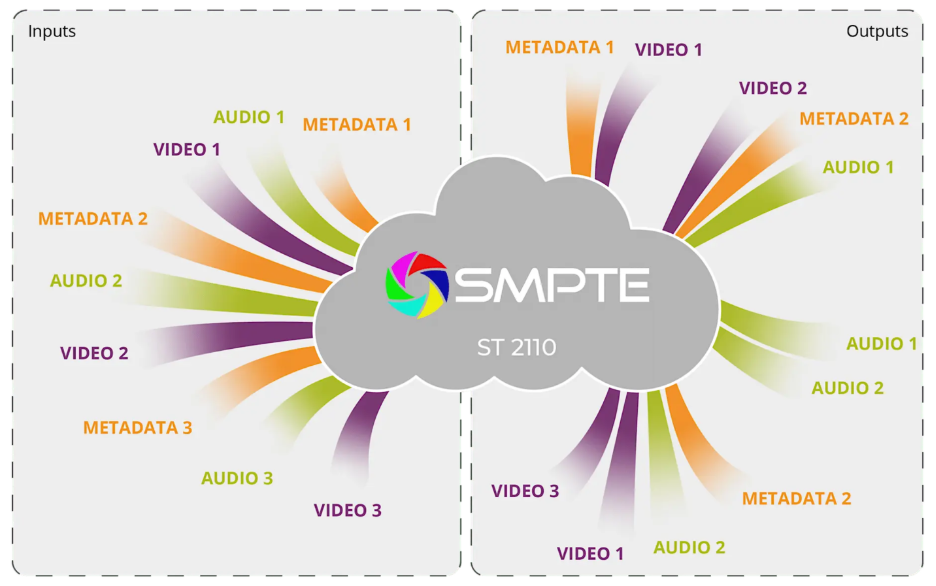
Live IP Essentials: From Networking to SMPTE ST 2110
Build your understanding of IP-based live production in two days, covering networking, SMPTE ST 2110, PTP, NMOS, and dynamic media facilities.
Description
From Networking to SMPTE ST 2110
Build your understanding of IP-based live production in two days, covering networking, SMPTE ST 2110, PTP, NMOS, and dynamic media facilities.
This SMPTE Sponsored course cost is heavily subsidised by the volunteer work of SMPTE team in the US, Europe and OCEANIA to bring this high-quality training at an affordable price to support our industry colleagues.
Cost:
ONLY $100- If you register in advance - $200 on the day (if space available).
SMPTE Members – FREE – if you Preregister and attend on the day. ($100 otherwise)
Students – FREE - if you Preregister and attend on the day. ($100 otherwise)
Training Locations:
Sydney 3rd & 4th December
Telstra Centre – 400 George St, Sydney, NSW 2000
Book Here - https://www.eventbrite.com/e/2003866580886?aff=oddtdtcreator
Auckland 7th & 8th December AUT (Auckland University of Technology)
Book here - https://www.eventbrite.com/e/2003866850693?aff=oddtdtcreator
Expert Trainer:
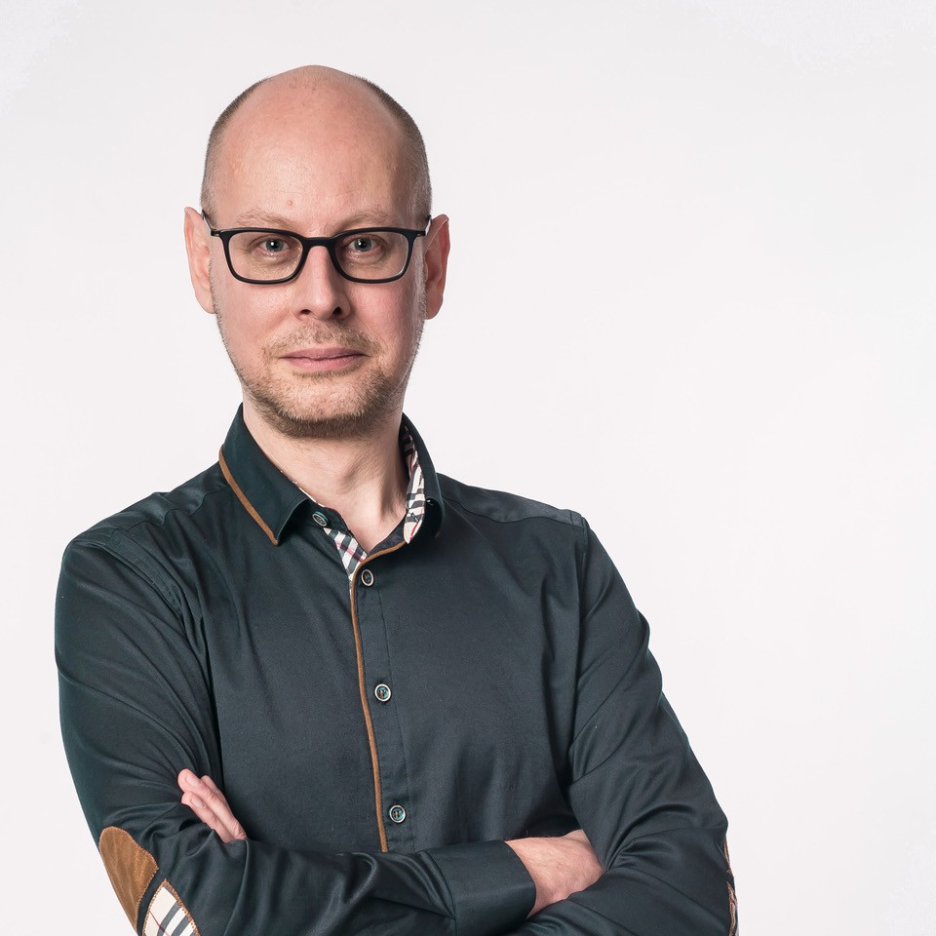
Willem Vermost is the Senior Media Technology Architect at the European Broadcasting Union (EBU), where he works on the evolution of media production and delivery technologies.
Willem brings a strong combination of engineering expertise and practical experience in the development and implementation of innovative media technologies. His contributions include the award-winning VRT Live IP proof-of-concept projects, the Joint Task Force on Networked Media (JT-NM) Tested Programme, and the development and launch of the open-source EBU Live IP Software Toolkit (LIST). These initiatives have helped advance the adoption of IP-based technologies and open approaches within the broadcast industry.
Willem is an active member of the Society of Motion Picture and Television Engineers (SMPTE) and was named a SMPTE Fellow in 2020. He is also a member of the EBU Academy faculty, where he shares his expertise through training on the transition to live IP-based media facilities. He also serves on the board of directors of AWMA. In his current role at the EBU, Willem is involved in the development of the Dynamic Media Facility (DMF) and the establishment of the Media eXchange Layer (MXL). He also serves on the JT-DMF Steering Committee, contributing to the ongoing development of open, interoperable, and flexible approaches to media production infrastructure.
Course Outline
Moving from SDI to IP changes how media facilities transport content, synchronize systems, and connect production resources. This two-day course takes you from essential networking concepts to the standards and technologies behind modern live production.
On Day 1, build your foundation in IP networking: physical connections, addressing, routing, multicast, and the protocols that support communication. On Day 2, connect those fundamentals to media transport, SMPTE ST 2110, timing with PTP, control with NMOS, and the evolution toward Dynamic Media Facilities.
Whether you are preparing for an IP transition, supporting an existing facility, or refreshing your technical knowledge, you will develop a clearer understanding of the systems you work with and the decisions ahead. Each day concludes with dedicated time for questions and discussion.
What you will learn
By the end of the course, you will be better equipped to:
- Explain the drivers, opportunities, and challenges of moving from SDI to IP-based production.
- Describe how networking layers, addressing, routing, and multicast support media workflows.
- Understand how audio and video are packetized, transported, and reconstructed.
- Explain the roles of SMPTE ST 2110, PTP, and NMOS—and how they work together.
- Discuss the concepts behind Dynamic Media Facilities and their relationship to the Media eXchange Layer (MXL).
Who should attend?
This course is designed for broadcast and media engineers, technical operations staff, systems integrators, IT and network professionals working with media, and technical managers involved in production infrastructure.
It is particularly relevant to professionals moving from SDI-based environments to IP, as well as those seeking a structured refresher that connects networking fundamentals with media applications.
Two-day agenda
Day 1 | Build your IP networking foundation
|
Time
|
Session
|
What we’ll cover
|
|
09:30–10:30
|
Why move to IP/IT?
|
The shift toward IP networks and software-based production: flexibility, scalability, cost considerations, and transition challenges.
|
|
10:30–11:30
|
Physical and data link layers
|
Network transmission media, copper and optical cabling, fiber safety, and the fundamentals of Layer 2 communication.
|
|
11:30–12:30
|
The network layer
|
IP addressing, routing, and how data moves between networks.
|
|
12:30–13:15
|
Lunch break
|
|
13:15–14:15
|
Multicast
|
How one-to-many delivery works across Layers 2 and 3, including its benefits and limitations.
|
|
14:15–15:15
|
Transport and application protocols
|
UDP, TCP, and QUIC; an introduction to DNS, mDNS, DHCP, and RTP.
|
|
15:15–16:00
|
Q&A and discussion
|
Revisit key concepts and bring your questions.
|
Day 2 | Connect networking to live media production
|
Time
|
Session
|
What we’ll cover
|
|
09:30–10:30
|
Packet-based media transport
|
How audio samples and video frames are packetized, transmitted, and reassembled using RTP.
|
|
10:30–11:30
|
SMPTE ST 2110
|
The standards suite, its key components, and the transport of separate video, audio, and ancillary data streams over IP.
|
|
11:30–12:30
|
Precision Time Protocol (PTP)
|
The fundamentals of network timing and synchronization in ST 2110 environments.
|
|
12:30–13:15
|
Lunch break
|
|
13:15–14:15
|
NMOS
|
How AMWA’s open specifications support discovery and connection management alongside ST 2110.
|
|
14:15–15:15
|
Dynamic Media Facilities
|
The move toward flexible, software-based production, the EBU–AMWA collaboration, and the relationship between DMF and MXL.
|
|
15:15–16:00
|
Q&A and discussion
|
Connect the concepts and explore questions relevant to your work.
|
Build the knowledge to contribute confidently to your organization’s IP production journey.
Register to join us.
REGISTER HERE
and
REGISTER HERE AS WELL




 Education, Membership and Standards Directors
 Fellows
 Award Programs
 Society Governance






 Section Officers and Managers
 Section Event Non-Member Sign-Up
 2026 Section Elections Results





 Standards Projects
 Patent Statements
 Advisory Notes
 Appeals
 IMF User Group



 Editorial Calendar
 Guidelines for Submitting
 Subscribe
 Board of Editors







 Media Kit
 SMPTE Logos
 Support Tickets
 Get Alerts!
 SMPTE Stories