



<img height="1" width="1" src="https://www.facebook.com/tr?id=414634002484912&amp;ev=PageView%20&amp;noscript=1">
Donate
WE MOVED!
New Address: 50 Main Street, Suite 1000 White Plains NY, 10606
Donate

SMPTE ST 2138 Catena Suite of Standards

SMPTE ST 2138 Catena

SMPTE ST 2138—informally known as Catena—is an initiative to define a unified, open, secure, and vendor-agnostic control plane for media systems. Its origins lie in the work of SMPTE’s Rapid Industry Solutions Open Services Alliance (RIS OSA), where industry members identified a persistent challenge: hundreds of incompatible, proprietary control protocols used across on premises, cloud, and hybrid media environments. This fragmentation created inefficiencies, impeded interoperability, and slowed innovation.

Recognizing that the problem required industry wide coordination, the RIS OSA group initiated Catena as a community-driven project designed explicitly to define how media devices and services communicate in a standardized, future-proof manner. The initial Catena model, connection types, and security design were collaboratively developed within RIS as a set of foundation documents.

In June 2025, these initial Catena documents—known collectively as the ST 2138 suite—were formally introduced into the SMPTE Standards Community, specifically the 34CS Technology Committee responsible for Media Systems Control and Services. This marked Catena’s transition from experimental innovation within RIS to the rigorous multi-stage SMPTE standardization process, where it continues to evolve through Public Committee Drafts (PCDs), member reviews, and iterative refinement.

SMPTE ST 2138 Standards Suite


OV 2138-0

Catena — Roadmap for the 2138 Document Suite
Document pending.

Availability Pending

ST 2138-10

Catena — Catena Model
This document specifies schema for plug-and-play communication and control of media services and devices across cloud, on-premises, and hybrid cloud/on-premises platforms.

This document also defines a number of Access Scopes that reflect how media production equipment is used in a variety of use cases.

ST 2138 is currently a Public Committee Draft, and is accessible for review via the GitHub button at the right. Comments can be entered using the Issue Tracker in GitHub.

ST 2138-10 PCD


ST 2138-11

Catena — gRPC Connection Type
This document defines the use of a gRPC connection manager with Catena.

Availability Pending

ST 2138-12

Catena — REST Connection Type
This document specifies the use of a REST connection manager with Catena.

Availability Pending

ST 2138-19

Catena — Protocol Objects
This document defines the objects that are exchanged between participants using the ST2138 protocol.

Availability Pending

ST 2138-50

Catena — Authenticity - Integrity - Access Control - Confidentiality and Availability
This document specifies how to securely utilize the Catena control protocol (as defined in ST 2138) with respect to authenticity, integrity, access control, confidentiality and availability.

Availability Pending

ST 2138a

Catena — Elements Repository for SMPTE ST 2138 Catena API Implementation
This API implementation is applicable to all parts of the SMPTE 2138 Document Suite.

ST 2138 Elements


SMPTE 2138 FAQs

Why SMPTE ST 2138?

The Hybrid Environment Reality
Today’s environments typically encompass a combination of on-premises and cloud environments. Solutions span a variety of platforms, and must interoperate, regardless of where they are hosted.

Need for More Seamless Multi-Vendor Integration
The number of devices, products and services from a wide array of vendors can be daunting, particularly with the move to microservices. Media companies need technologies to simply work together.

Security Is Now Table Stakes
Security is a minimum requirement in the industry. (Ellen Note: I added this description.)


What is the ST 2138's scope?

Catena’s goal is to make it easy to secure, connect and control a multi-vendor ecosystem of on premises and cloud-based media processing services and microservices.

  • Catena standardizes communication methods on technologies of all sizes. All the way from tiny microservices to full products. This enables true plug and play, even dynamically while services are running.

  • A Catena compliant Catena ecosystem provides APIs that can be used to orchestrate these services, along with UI hints, status, and alarming.

  • Catena is designed leveraging documented standards and best practices for software-based media processing to address command, control, status and security for devices.


Is SMPTE ST 2138 secure?

ST 2138-50 specifies how to securely utilize the Catena control protocol (as defined in ST 2138) with respect to authenticity, integrity, access control, confidentiality and availability.

ST 2138-50 is applicable to how the following are to be supported by compliant devices and services:

  • Authenticity
    • Clients can verify that communications are from the intended device and no other source.
    • Devices can verify that the access tokens accompanying each request were issued by the authorization server in the token’s iss claim.
  • Integrity — Clients can trust that communications from a compliant device or service have not been tampered with in transit.
  • Interoperability — Which OAuth2 Access Control flows are used by clients and supported by a compliant device or service.
  • Access Control
    • The responsibility of the device to provide Policy Enforcement Point functionality, and how this responsibility may optionally be divided between devices and gateways.
    • Access revocation functionality required by the device.
    • Correct handling in the event of access token expiry.
  • Confidentiality — Confidentiality of data in transit.
  • Availability — How timely access to device capabilities is promoted by using JWS rather than opaque access tokens, thereby avoiding round trips by devices to the Authorization server’s introspection endpoint.

What is SMPTE 2138 model architecture?

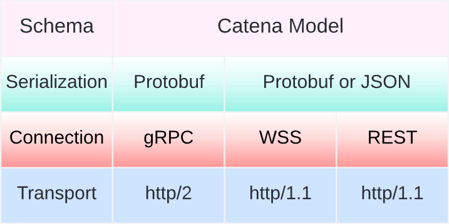
SMPTE ST 2138 model architecture shown in the following figure (see SMPTE ST 2138-10 above for more details):


Additional Resources